A Patient-Philanthropist’s Vision for New Cancer Research
Philanthropy has always played a major role in research at UNC, but Barbara Dean has taken this one step further by being an active participant in supporting those research efforts. Dean’s experience working with early-career UNC researchers recently led her to establish the Fund for Innovation in Cancer Research.
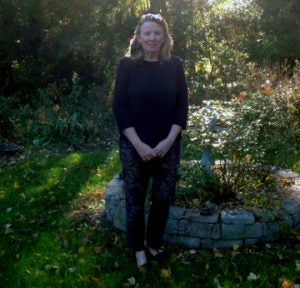
Dean has a long relationship with UNC and UNC Health as both a patient and donor, meaningful connections which led her to join the UNC Lineberger Comprehensive Cancer Center’s Patient Advocates for Research Council (PARC). As part of her volunteer role on the Council, Dean reviews UNC grant proposals through the lens of a patient advocate.
Patty Spears, Research Manager for PARC and the UNC Lineberger Excellence in Advocacy Program, said that Dean was a perfect fit for the grant review panel.
“It was a very good fit for her because she has such an inquisitive mind,” Spears said. “She asks a lot of questions. She thinks outside of the box, and she really has a way of challenging research in general just by asking questions.”
One of the proposals Dean reviewed was submitted by Blake Rushing, PhD, an assistant professor in the Department of Nutrition at the UNC Gillings Global School of Public Health. Rushing’s proposal caught her attention because it related to her own experience as a patient. The proposed research was to investigate links between cancer cell metabolism and resulting metabolites. It would do this by examining the tissue of cancer patients to determine what metabolites are present in cancer cells.
These metabolites, chemical traces of what people eat, can help researchers identify foods and other biochemical factors that promote tumor growth. This could lead to better treatments, possible cures and dietary recommendations, including more personalized approaches.
“Think of cancer cells as separate organisms which have their own dietary needs,” Rushing said. “And so that tells us about what nutritional pathways that perhaps we can target in tumors and other similar experimental model systems.”
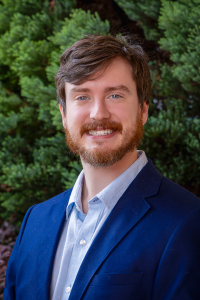
While the proposal was initially not chosen for funding, Dean decided to try to fund the research herself through a personal donation. With the assistance of Spears and the UNC Health Foundation, she provided the pilot funding that Rushing needed.
“I was hopeful that Dr. Rushing’s proposed research would bring much needed hardcore bench science to the study of cancer cell metabolism,” Dean said. “But there was a problem. Dr. Rushing needed sufficient data to support a grant application and to obtain that data he needed funding. I offered to provide that funding.”
The research funded through Dean’s initial support produced results and led to insights into potential nutritional and pharmacological strategies that target the metabolites cancer cells rely upon.
“Dr. Rushing’s work yielded convincing results and data spilled out, far exceeding expectations,” Dean said. “He subsequently received a $3.9 million, five-year RO1 NCI grant to support the development of the Human Cancer Metabolome Atlas. As Dr. Rushing has noted, this Atlas will be a publicly available resource for all cancer researchers studying the tumor metabolic landscape.”
With her work with Rushing as a proof of concept, Dean established the Fund for Innovation in Cancer Research.
“The traditional grant-funded research approach may be the gold standard and highest and best use of tax-supported dollars but it can fall short in supporting more innovative research that could potentially catapult the study of cancer forward at an unprecedented pace,” Dean said. “So, I asked, ‘Is there another way? Can we be bold? Are we willing to fund failure?’”
Dean believes that a privately funded research program could answer “yes” to all three of these questions, and she urges other donors to support the new fund and others like it to help attract and support new researchers and provide opportunities for the kind of innovative research needed to help treat and cure cancer.
“The opportunities appear endless, and I hope the public will join me in supporting this fund and all the discoveries yet to be found.”
For more information on supporting innovative cancer research, please contact Ellen Tompkins, Director of Development, at [email protected].