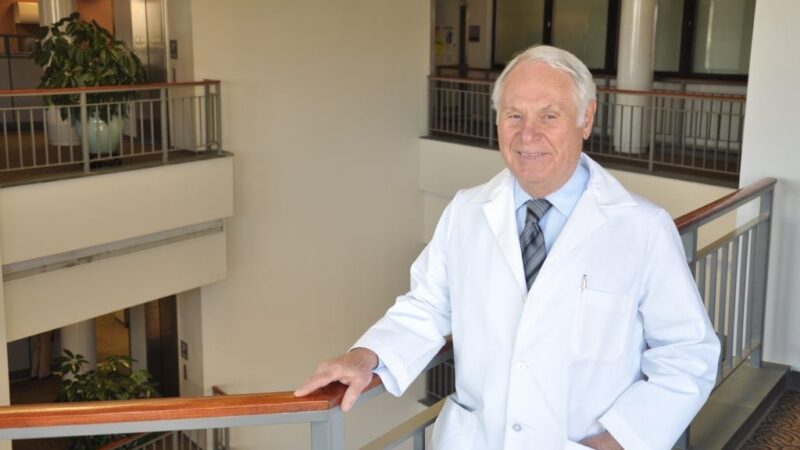
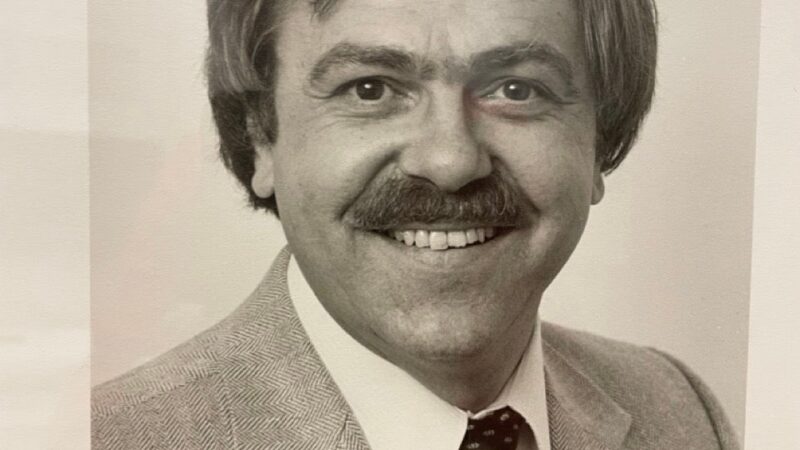
The Collaborative Legacy of Dr. Bill Marzluff: Connecting People, Ideas and Discovery
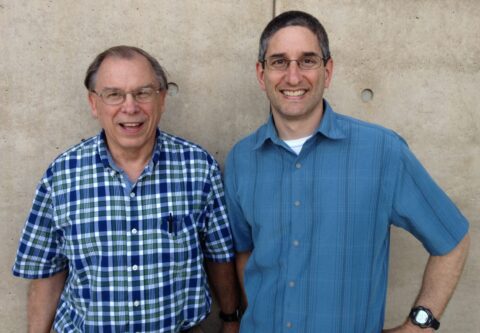
Gift establishing a new RNA biology professorship will support faculty who carry forward his vision of collaboration across campus
Walk through the halls of the University of North Carolina’s Genome Sciences Building, and you quickly sense the presence of Bill Marzluff, PhD. For decades, he has moved easily between labs, offices and departments—connecting people, sharing ideas and bringing disciplines together. That instinct for collaboration has shaped not only his career, but the culture of research at Carolina. Now, through his gift establishing the RNA Biology Term Professorship, he is ensuring that same spirit of connection continues to drive discovery for years to come.
“I turned 81 recently,” Marzluff said with a smile. “I’m in phased retirement… but I’m still publishing.”
That quiet persistence—paired with a lifelong commitment to collaboration—has defined his impact at UNC. For more than three decades, Marzluff has helped transform how science is done across campus, building bridges that continue to support innovation today.
“Bill is one of my closest colleagues and most favorite people in the world,” said Bob Duronio, PhD, chair of the Department of Biology and a longtime collaborator. “He is incredibly generous, incredibly smart and basically a scientific genius.”
Building Something New
Marzluff came to UNC in 1991 after 17 years in the Chemistry Department at Florida State University, drawn by an opportunity to lead what was then the Program in Molecular Biology and Biotechnology (PMBB).
Backed by early investments from the North Carolina Biotechnology Center and the state, the program was designed to do something unusual—bring faculty together across traditional academic boundaries.
“The goal was to hire faculty with expertise in biotechnology and molecular biology and do that by hiring not only in the medical school but also in the college,” Marzluff said.
That program would later evolve into the Integrative Program for Biological and Genome Sciences (iBGS), a model of interdisciplinary research and graduate education that continues to define UNC’s approach.
“He built programs that demand collaboration—particularly between the college and the School of Medicine,” added Duronio. “Such collaborations make science better and that is Bill’s legacy.”
Designing a Culture of Collaboration
At many institutions, silos define how research is done. Marzluff helped dismantle them here in Chapel Hill.
“As far as I can tell, this is one of the most collaborative campuses there is,” Marzluff said.
Through intentional hiring, shared facilities and joint appointments, he helped create an ecosystem where collaboration is not optional but expected.
“He created structures that allowed people to do the best science, no matter where they were,” said Duronio. “That kind of leadership is not common.”
His impact can be seen not just in programs, but in the physical campus. Buildings like Fordham Hall and the Genome Sciences Building were designed to bring faculty from multiple disciplines and schools into close proximity, reinforcing daily interaction.
“Shelley Earp (former director of the UNC Lineberger Comprehensive Cancer Center) and Bill were the two people in the School of Medicine that created this culture that we brag about all the time,” Duronio added.
Leadership That Shaped an Institution
Marzluff’s influence expanded further when he became the first Associate Dean for Research in the UNC School of Medicine, a role he held from 1997 to 2010. During that time, he helped build the infrastructure that supports scientific discovery across UNC. His contributions were recognized when he was named a Kenan Distinguished Professor of Biochemistry and Biophysics in 2002.
“Bill’s leadership allowed us to build a lot of core facilities that serve everyone on campus,” Duronio said, adding that his approach emphasized shared access and collective benefit.
“He’s not someone who says, ‘This is mine, you can’t use it.’ He’s exactly the opposite.”
This approach helped establish UNC’s renowned culture of collaboration.
“Bill helped create this low-walls culture of ours, where we’re the most collaborative university, something we’re all very proud of,” added Duronio. “He literally walks around the whole place talking to everybody.”
Transforming Graduate Education
Marzluff also played a central role in redefining biomedical graduate education at UNC.
Under his leadership, PMBB — and later iBGS — created a model that encouraged students to explore across disciplines before choosing a research path.
“They didn’t decide which program they were going to get their PhD in until after their first year,” Marzluff said.
That philosophy extended into broader initiatives, including interdisciplinary graduate recruitment efforts. Founded in 2008, the Biomedical and Biological Sciences Program (BBSP) positioned UNC as a national leader. The BBSP program recruits more than 100 graduate students each year who can choose among 14 graduate programs, housed in multiple schools across campus, including the College of Arts and Sciences and Schools of Medicine, Pharmacy, Dentistry and Public Health. Today, iBGS continues to bring together students and faculty from across campus, strengthening both research and training.
“He picked up the mantle, found the money, and built a program that made UNC a leader in graduate education across the country, if not the world,” said Duronio.
A Scientist Ahead of His Time
At the core of Marzluff’s research is a lifelong focus on RNA biology, particularly the study of histone mRNAs, which encode the proteins that package our DNA into chromosomes. When Marzluff began his work in 1974, the contribution of RNA to animal and human development was not widely studied, but RNA has since become one of the most important areas in modern science and medicine. Advances in understanding RNA have been crucial to the development of modern vaccines and immunotherapies for cancer.
“Histone mRNAs differ from all other mRNAs in animal cells, so we’ve studied all aspects of their metabolism,” Marzluff explained. “There was almost nobody else studying them. RNA certainly has become a big deal… especially about five years ago when RNA formed the basis for rapidly making the (COVID-19) vaccines.”
Mentorship and Community
Throughout, collaboration has been central to his work. Marzluff’s legacy extends beyond research into the relationships he has built over decades.
“He just loves doing science with others,” Duronio said. “Half of what my lab does now has grown out of my collaboration with Bill.”
“He’s been a mentor to basically all of my students,” Duronio said. “He has 45 PhD students—it’s like a huge extended family. He’s constantly in my lab and in my office for the last 25 or 30 years. He’s in everybody’s work — but in a good way — because he just loves the science.”
Investing in the Future
With the creation of the professorship, Marzluff is investing in the future of the program he helped build. The professorship is intended to support an associate or full professor—either recruiting new talent to UNC or retaining outstanding faculty already here—within iBGS.
“What I’d like to do is fund the recruitment of a senior person, similar to what brought me here to UNC many years ago” Marzluff said. “It gives us the ability to attract high-quality scientists into this unique position.”
The structure of the role reflects his long-standing commitment to integration, with joint appointments spanning the College of Arts and Sciences and the School of Medicine.
“It helps sustain a program that is truly special—not just at UNC, but nationally,” added Duronio. “You have the best of both worlds. You can have more time for your research but also teach and really impact the profession and education in a more classical way.”
A Legacy That Endures
Marzluff’s career has been defined by connection—between people, ideas and discovery. Even now, that legacy continues through his mentorship, his research and his philanthropy.
“100%, that’s his legacy,” said Duronio. “How he made everything collaborative here at UNC.”
For Marzluff, the goal has never been individual recognition, but something far more lasting.
“He’s extremely humble,” Duronio added. “He’s proud of what’s he’s done and the people he’s hired. He’s not a self-aggrandizer. But he cares deeply—that’s why he created this culture.”
Through his latest gift, that work continues, ensuring that the bridges he built across biology will carry UNC forward for generations to come.
To learn more about supporting the work of the UNC Department of Biochemistry and Biophysics, contact Kara Raynor, Vice President, Philanthropy, at [email protected].